Traditional Dual-Write creates more integration complexity than it solves.
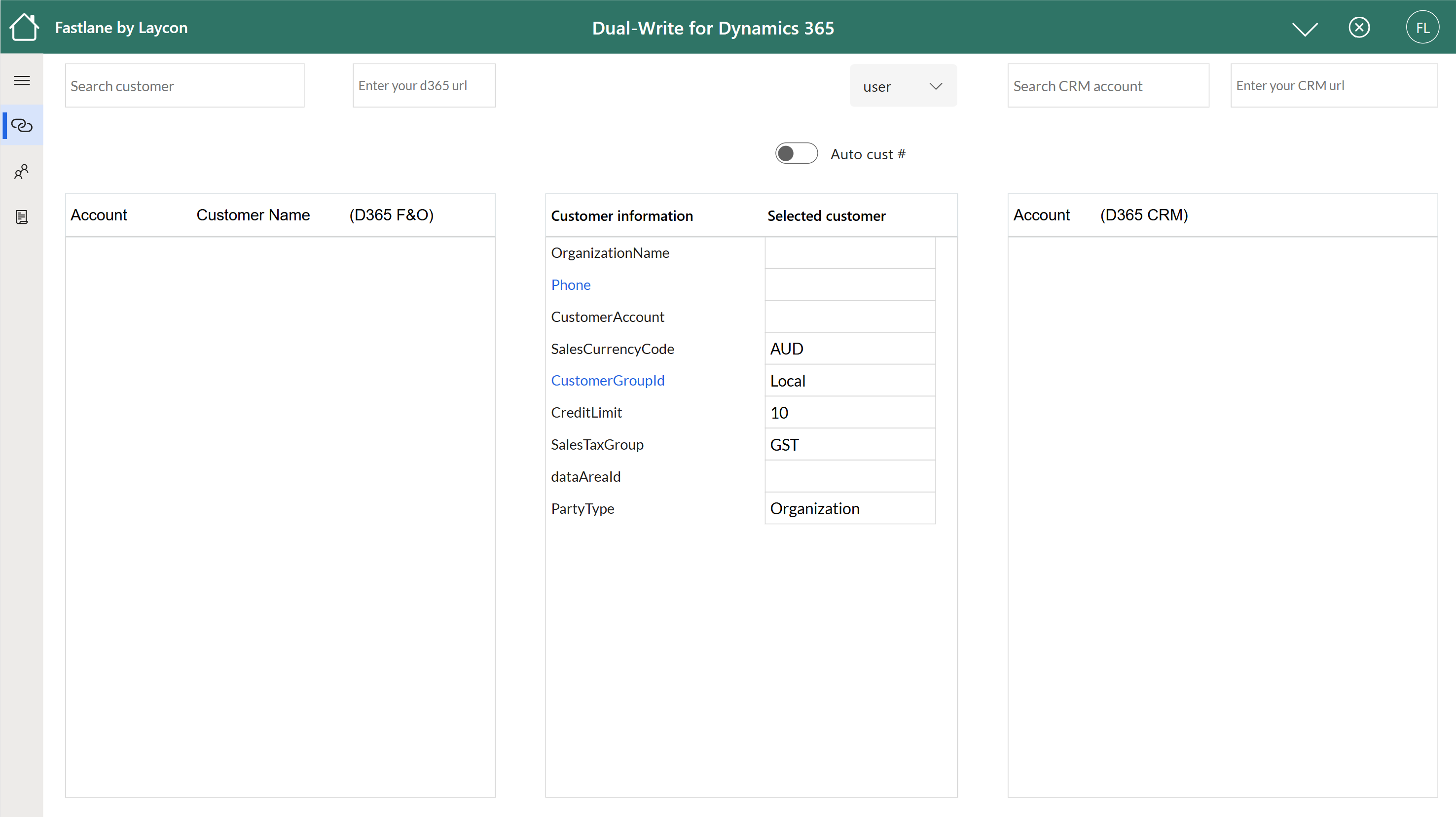
The Challenge
Many organizations rely on dual-write integrations to synchronize data between Dynamics 365 CE and D365 F&O. While this approach promises real-time synchronization, it often introduces significant operational challenges.
As systems grow and integration needs expand, traditional dual-write architectures become difficult to manage, fragile to maintain, and costly to scale.
Dual-write integrations tightly couple systems together. Changes in one system often require updates across multiple integrations, making deployments risky and slow.
Traditional dual-write approaches are designed for specific system pairs. Extending them to support additional services or applications often requires new integrations and additional maintenance.
Managing entity mappings and transformation logic becomes increasingly complex as systems evolve. Even small schema changes can break synchronization processes.
Modern AI applications require flexible access to enterprise data. Traditional dual-write models were not designed to support AI agents, automation workflows, or intelligent applications.
Fastlane Provides a Modern Alternative
Fastlane replaces fragile point-to-point dual-write integrations with a centralized orchestration and API layer.
While traditional dual-write enables direct synchronization between systems, it often introduces tight coupling and operational complexity as integrations scale. Fastlane provides a more flexible, controlled approach to enterprise data synchronization.
| Capability | Traditional Dual-Write | Fastlane |
|---|---|---|
| Architecture | Direct system-to-system synchronization | Unified integration and orchestration layer |
| System Coupling | Tightly coupled systems | Loosely coupled architecture |
| Integration Flexibility | Limited to specific system pairs | Connect multiple services and applications easily |
| Data Orchestration | Rigid entity synchronization | Configurable data flows and transformations |
| Monitoring & Governance | Limited visibility and control | Centralized monitoring, logging, and policy enforcement |
| Extensibility | Difficult to extend to new systems | Plugin architecture for new services and workflows |
| AI & Automation Ready | Not designed for AI agents or Copilots | Built to power AI Copilots, automation, and intelligent apps |
| Maintenance | Requires managing multiple fragile integrations | Managed through a single unified platform |
Stop Managing Fragile Integrations. Start Building on a Modern Integration Platform